Overview
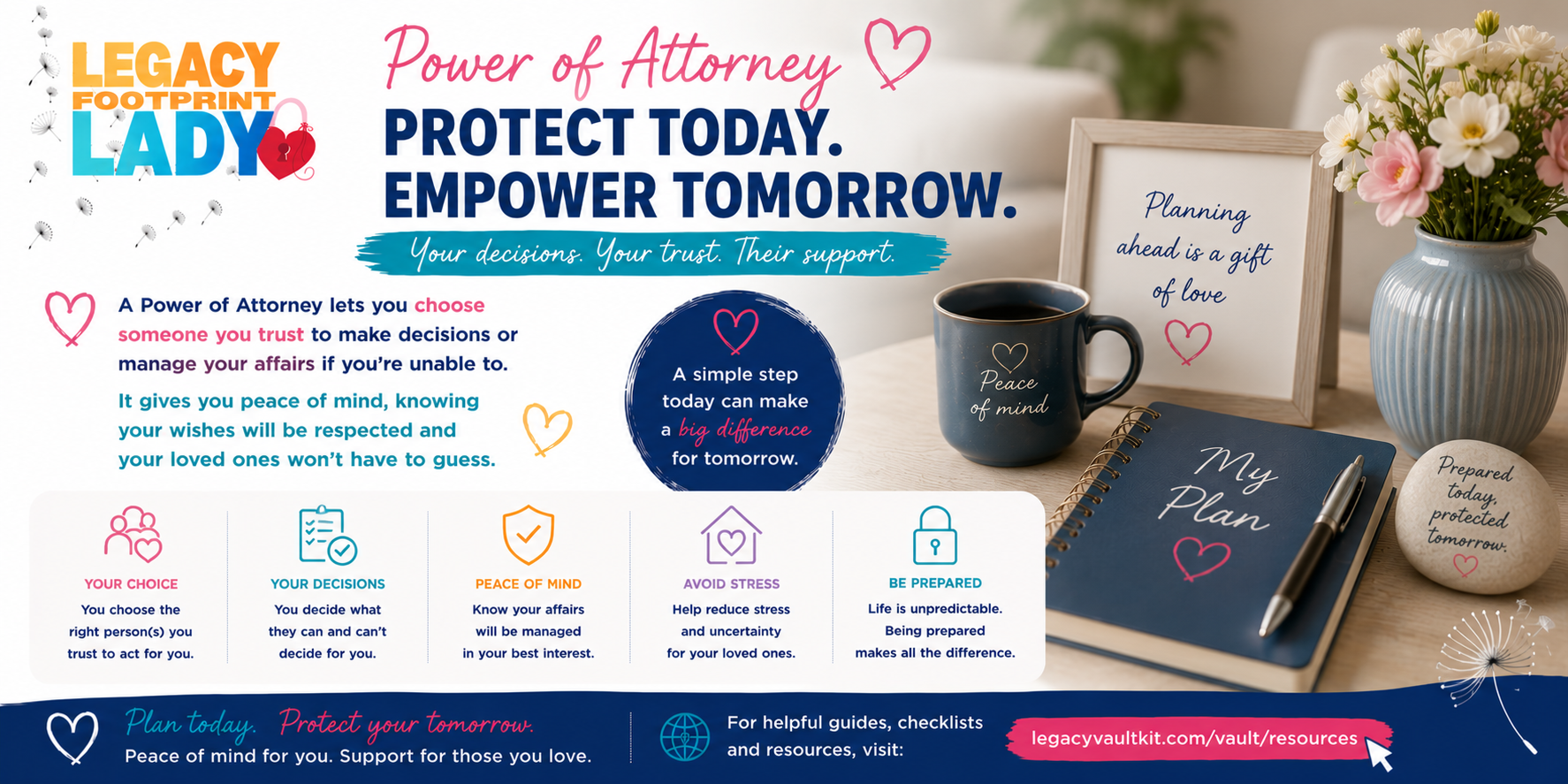
A power of attorney is a legal document that gives someone you trust the authority to act on your behalf. There are different types for different situations, and understanding which one you need is important. This guide focuses on the most common types used in England and Wales.
Why This Matters
Without a power of attorney in place, if you lose mental capacity, your family may have no legal authority to manage your finances or make decisions about your care. They would need to apply to the Court of Protection, which is expensive, time-consuming, and stressful. Setting up a power of attorney while you are well is one of the most important things you can do to protect yourself and your family.
Key Facts
- A power of attorney can only be set up while you have mental capacity.
- There are two main types: Lasting Power of Attorney (LPA) for property and finances, and LPA for health and welfare.
- An ordinary power of attorney is only valid while you have mental capacity.
- A Lasting Power of Attorney must be registered with the Office of the Public Guardian before it can be used.
- Registration currently takes around 20 weeks.
- You can have more than one attorney, and you can specify how they must act together.
- You can restrict or give guidance on how your attorney uses their powers.
- An attorney must act in your best interests at all times.
Step by Step
- 1
Decide which type of power of attorney you need
For most people, a Lasting Power of Attorney (LPA) is the right choice. There are two types: one for property and financial affairs, and one for health and welfare. Many people set up both. An ordinary power of attorney is useful for short-term situations, such as if you are abroad, but it stops being valid if you lose mental capacity.
- 2
Choose your attorney
Your attorney must be someone you trust completely. They will have significant power over your affairs. You can appoint more than one attorney and specify whether they must act jointly (together) or jointly and severally (independently). Choose someone who is reliable, organised, and understands your wishes.
- 3
Complete the LPA forms
You can complete the LPA forms online using the Office of the Public Guardian service, or on paper. You will need to provide details of your attorneys, any restrictions or guidance, and a certificate provider (someone who confirms you understand the document and are not being pressured).
- 4
Sign the LPA correctly
The LPA must be signed by you, your certificate provider, and your attorneys in a specific order. If the signing process is not done correctly, the registration will be rejected. Read the instructions carefully or use a solicitor to help.
- 5
Register the LPA
Send the completed LPA to the Office of the Public Guardian for registration. There is a registration fee of 82 pounds per LPA (as of 2024). Registration currently takes around 20 weeks. The LPA cannot be used until it is registered.
- 6
Keep the registered LPA safe
Once registered, keep the original LPA in a safe place and tell your attorney where it is. You may need to provide certified copies to banks and other organisations. Record the details in your vault so your family knows it exists and where to find it.
Keep all your legal documents and notes in one secure place. Your family will know exactly where to look when it matters most.
Frequently Asked Questions
- What is the difference between an LPA and an ordinary power of attorney?
- An ordinary power of attorney is only valid while you have mental capacity. It is useful for short-term situations, such as managing affairs while you are abroad. A Lasting Power of Attorney (LPA) continues to be valid even if you lose mental capacity, which is why it is so important to set one up while you are well.
- Can I set up an LPA myself without a solicitor?
- Yes. You can complete and register an LPA yourself using the Office of the Public Guardian online service. However, mistakes are common and can cause delays or rejection. For peace of mind, many people use a solicitor, especially if their situation is complex.
- What happens if I lose mental capacity without an LPA?
- Without an LPA, your family has no legal authority to manage your finances or make decisions about your care. They would need to apply to the Court of Protection for a deputyship order, which can take many months and cost thousands of pounds.
- Can I cancel a power of attorney?
- Yes. You can cancel (revoke) a power of attorney at any time while you have mental capacity. You should notify your attorney in writing and, for a registered LPA, notify the Office of the Public Guardian.
- Is a UK LPA valid abroad?
- A UK LPA may not be recognised in other countries. If you live abroad or own property abroad, you may need to set up a local equivalent. Speak to a solicitor who specialises in international estate planning.
- Can my attorney make gifts on my behalf?
- An attorney for property and financial affairs can make gifts on your behalf, but only within certain limits. They can make gifts on customary occasions such as birthdays and at Christmas, and to charities you have previously supported. They cannot make large gifts without court approval.
Official Resources
These links go directly to official government and trusted organisation websites.
How Legacy Vault Kit Can Help
Legacy Vault Kit has a Legal section where you can record the details of your power of attorney, including the type, the name of your attorney, and the registration number. You can also store a copy of the registered document. This means your family and your attorney will know exactly where to find it when needed.