Overview
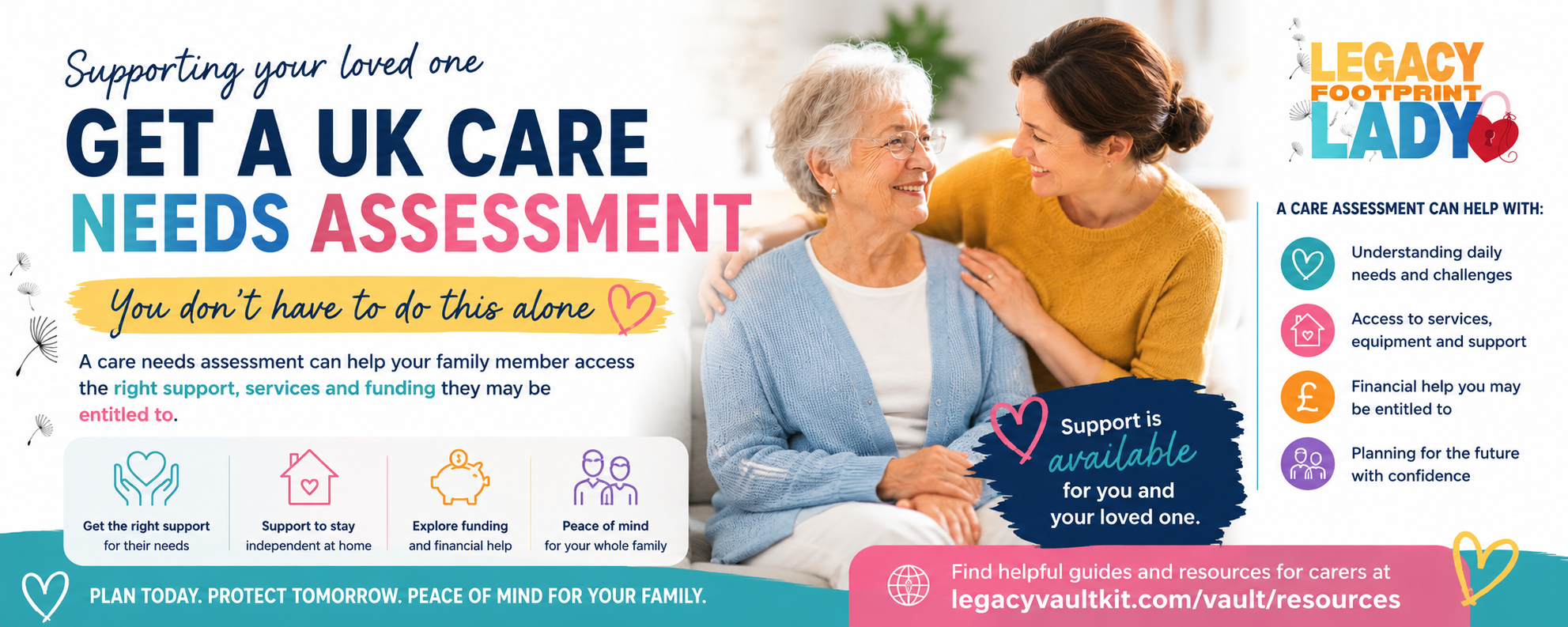
If someone you care about is struggling with daily life — whether due to age, illness, or disability — a care needs assessment can help them access the right support. It is free, carried out by the local council, and can lead to practical help at home, equipment, or funding for care. You do not have to be in crisis to ask for one. You can request it at any time.
Why This Matters
Many families wait too long before asking for help. A care needs assessment is not just for people in crisis — it is for anyone who is finding daily life more difficult. The earlier you ask, the more options are available. It can also give the person being assessed — and their family — a clearer picture of what support is available, which reduces stress and uncertainty for everyone.
Key Facts
- Anyone can request a care needs assessment — the person themselves, a family member, or a carer.
- The assessment is free, regardless of income or savings.
- It is carried out by the local council's adult social care team.
- The assessment looks at what the person can and cannot do, and what support would help.
- If eligible, the council will create a care and support plan.
- Financial support such as direct payments may be available after a means test.
- You can ask for a carer's assessment at the same time if you are providing unpaid care.
- You have the right to have someone with you during the assessment.
Step by Step
- 1
Contact the local council
Find the adult social care team for the area where the person lives. You can find this on the council's website or by calling the main council number. Ask to request a care needs assessment. You do not need a GP referral.
- 2
Prepare for the assessment
Think about what the person finds difficult — washing, dressing, cooking, getting around, managing medication, staying safe at home. Write it down. Be honest about the bad days, not just the good ones. The assessor needs to understand the full picture.
- 3
Attend the assessment
The assessment is usually done at home. A social worker or occupational therapist will ask questions about daily life, health, and what support is already in place. The person being assessed should be involved as much as possible. A family member or advocate can attend too.
- 4
Receive the outcome
After the assessment, the council will decide whether the person meets the eligibility criteria for support. If they do, a care and support plan will be created. If they do not, the council should still provide information about other sources of help.
- 5
Understand the financial assessment
If the person is eligible for support, the council will carry out a financial assessment to decide how much — if anything — they need to contribute towards the cost of their care. Some people pay nothing; others pay a contribution.
- 6
Review and appeal if needed
Care plans should be reviewed regularly. If you disagree with the outcome of the assessment, you have the right to ask for a review or make a formal complaint. Citizens Advice can help you understand your rights.
Keep all your care documents and notes in one secure place. Your family will know exactly where to look when it matters most.
Frequently Asked Questions
- Who can request a care needs assessment?
- Anyone can request one — the person who needs care, a family member, a friend, or a carer. You do not need a GP referral. Simply contact the adult social care team at the local council.
- Is a care needs assessment free?
- Yes. The assessment itself is always free, regardless of the person's income or savings. A separate financial assessment may follow to determine whether they need to contribute towards the cost of any care provided.
- What if the council says the person is not eligible?
- The council must still provide information about other sources of support. You can ask for a review of the decision, and you have the right to make a formal complaint. Age UK and Citizens Advice can provide free advice and advocacy.
- What is a carer's assessment?
- If you provide unpaid care for someone, you are entitled to a carer's assessment in your own right. This looks at your own needs and wellbeing, and may lead to support for you — such as a break from caring, or help with your own health.
- Can I get a care needs assessment if I live abroad but care for someone in the UK?
- The assessment is based on where the person who needs care lives, not where you live. You can still be involved in the process and attend the assessment, even if you are not based in the UK.
- What is a direct payment?
- A direct payment is money from the council paid directly to the person who needs care so they can arrange and pay for their own care. This gives more flexibility and choice over who provides the care and when.
Official Resources
These links go directly to official government and trusted organisation websites.
- Care needs assessments — GOV.UKOfficial guidance on how to request and what to expect from a care needs assessmentGOV.UK
- Find your local councilFind the adult social care team for any area in EnglandGOV.UK
- Age UK — Care needs assessment guidePlain-English guide from Age UK on what to expectAge UK
- Carers UK — Carer's assessmentInformation on getting a carer's assessment for unpaid carersCarers UK
- Citizens Advice — Care and supportFree advice on social care rights, assessments, and complaintsCitizens Advice
How Legacy Vault Kit Can Help
Legacy Vault Kit has a Personal section where you can record care arrangements, GP and specialist details, medication lists, and emergency contacts. If you are a carer, you can also store information about the person you care for — so that if something happens to you, someone else can step in and understand the situation quickly.