Overview
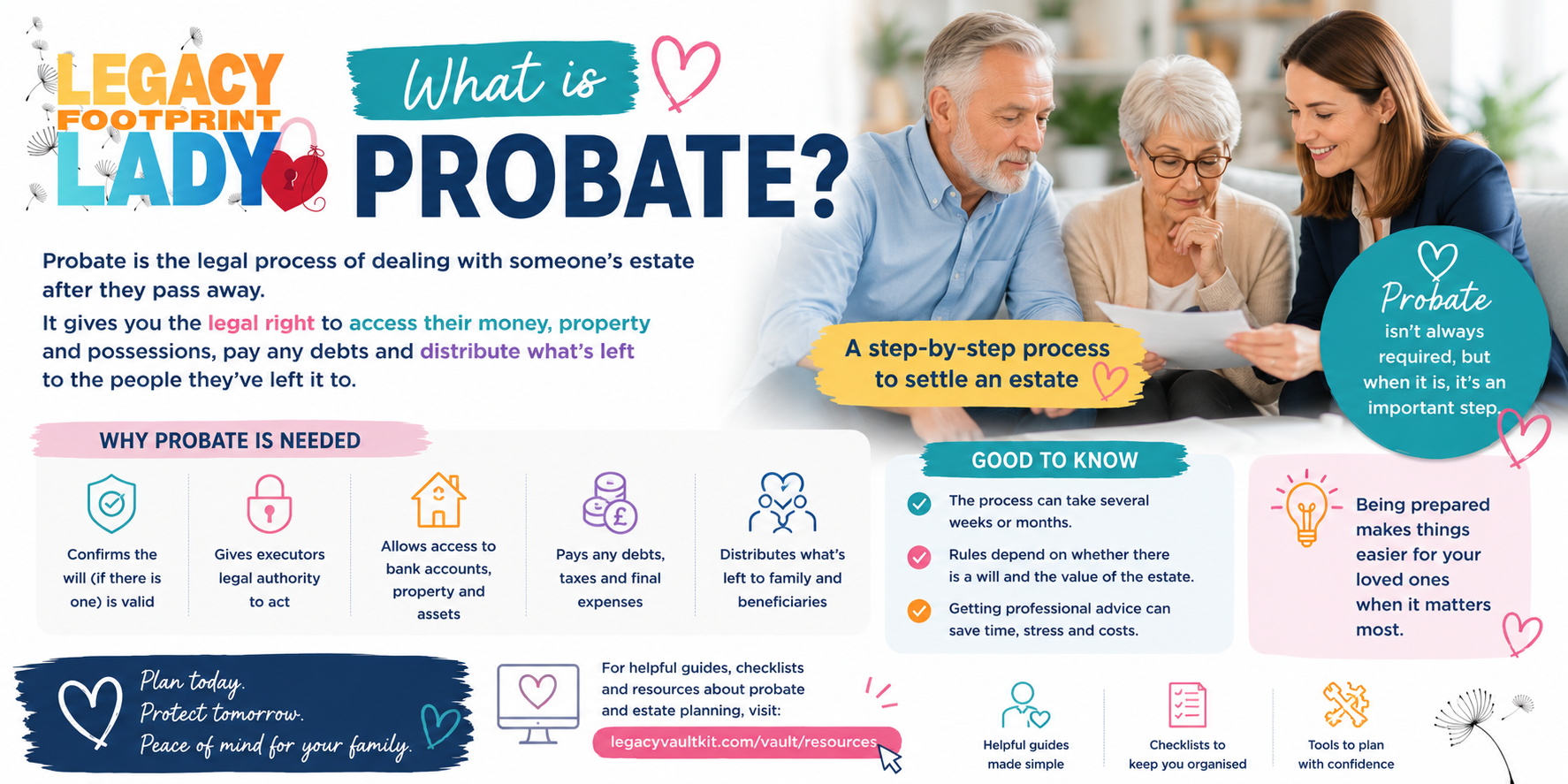
Probate is the legal process that gives someone the authority to deal with a deceased person's estate. If you are named as an executor in a will, or if someone dies without a will, you may need to apply for probate before you can access bank accounts, sell property, or distribute assets to beneficiaries.
Why This Matters
Without a grant of probate, many institutions will not release assets or transfer ownership. Understanding the process in advance means your family will know what to expect and can act quickly when the time comes.
Key Facts
- Probate is not always required. It depends on the size and type of the estate.
- Most banks require probate for accounts over a certain value, often around 50,000 pounds.
- Property owned solely by the deceased almost always requires probate to transfer.
- Jointly owned assets usually pass automatically to the surviving owner without probate.
- The probate process in England and Wales typically takes 3 to 6 months.
- You can apply for probate yourself or use a solicitor.
- The probate registry fee is 300 pounds for estates over 5,000 pounds (as of 2024).
- If there is no will, the estate is distributed under the Rules of Intestacy.
Step by Step
- 1
Find the will and identify the executor
The executor is the person named in the will to deal with the estate. If you are the executor, you will need the original will to apply for probate. If there is no will, the next of kin can apply for letters of administration instead.
- 2
Register the death and obtain death certificates
You will need several certified copies of the death certificate, usually at least 5 to 10. Banks, insurers, pension providers, and other institutions each require their own copy. Order extras at the time of registration as they are cheaper than ordering later.
- 3
Value the estate
You need to establish the value of everything the deceased owned at the date of death: property, bank accounts, investments, pensions, life insurance, vehicles, and personal possessions. You also need to identify any debts.
- 4
Check if inheritance tax is due
If the estate is above the inheritance tax threshold, you will need to complete an inheritance tax return and pay any tax due before probate is granted. Inheritance tax must be paid within 6 months of the end of the month of death.
- 5
Apply for the grant of probate
You can apply online through the HMCTS probate service or by post. You will need the original will, the death certificate, and the completed inheritance tax forms if applicable. The probate registry will issue a grant of probate once the application is approved.
- 6
Administer the estate
Once you have the grant of probate, you can collect assets, pay debts, and distribute the estate to beneficiaries according to the will. Keep detailed records of everything you do as executor.
Keep all your legal documents and notes in one secure place. Your family will know exactly where to look when it matters most.
Frequently Asked Questions
- Do I always need probate?
- Not always. If the estate is small, if assets are jointly owned, or if everything passes directly to a spouse, probate may not be needed. However, most banks require probate for accounts over a certain value, and property owned solely by the deceased almost always requires it.
- How long does probate take?
- In England and Wales, the probate process typically takes 3 to 6 months for straightforward estates. Complex estates with overseas assets, disputes, or inheritance tax issues can take considerably longer. The probate registry itself currently takes around 8 to 12 weeks to process applications.
- Can I apply for probate myself without a solicitor?
- Yes. Many people apply for probate themselves using the HMCTS online service. It is straightforward for simple estates. However, if the estate is complex, there are disputes, or inheritance tax is involved, using a solicitor or specialist probate service is advisable.
- What happens if there is no will?
- If someone dies without a will (intestate), their estate is distributed according to the Rules of Intestacy. The next of kin can apply for letters of administration, which gives them the same authority as a grant of probate. The rules of intestacy do not always reflect what the person would have wanted, which is why having a will is so important.
- What is the difference between probate and letters of administration?
- A grant of probate is issued when there is a valid will and an executor named in it. Letters of administration are issued when there is no will, or when the named executor is unable or unwilling to act. Both documents give the holder legal authority to deal with the estate.
- Can probate be contested?
- Yes. Anyone who believes the will is invalid, that they have been unfairly excluded, or that the estate is not being administered properly can contest probate. This can be costly and time-consuming, which is why a clear, up-to-date will is so important.
Official Resources
These links go directly to official government and trusted organisation websites.
- Apply for probateApply for probate online through the official HMCTS serviceGOV.UK
- Rules of IntestacyWho inherits if someone dies without a will in England and WalesGOV.UK
- Citizens Advice Probate guidePlain-English guide to probate from Citizens AdviceCitizens Advice
- Tell Us Once serviceReport a death to multiple government organisations at onceGOV.UK
How Legacy Vault Kit Can Help
Legacy Vault Kit has a Legal section where you can store your will, record the name and contact details of your executor, and list all your assets and accounts. When your executor needs to apply for probate, having this information organised and accessible will save them weeks of searching.