Overview
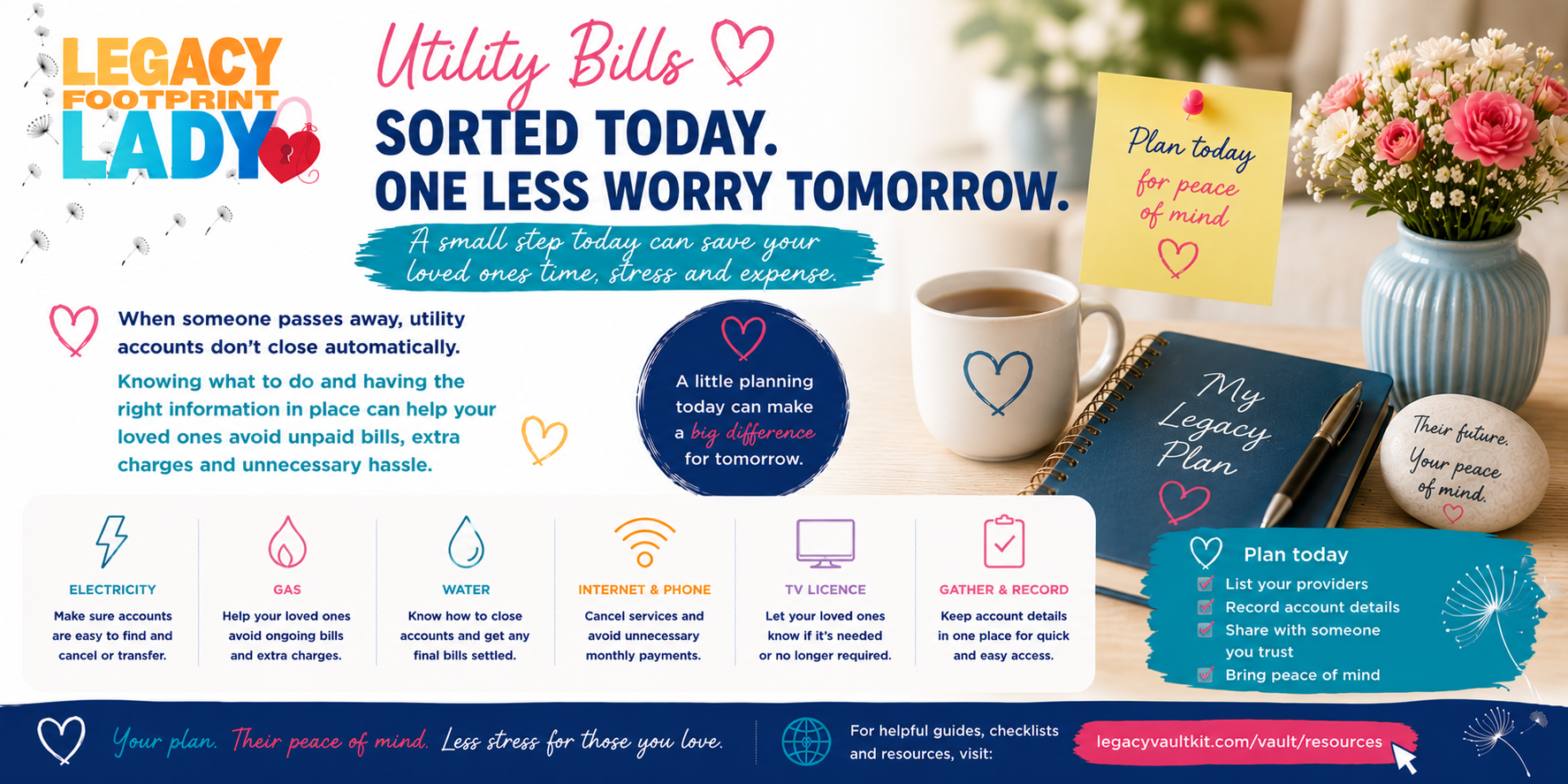
Dealing with utility bills and household accounts after a death is one of the many practical tasks that falls to the family or executor. It is not complicated, but it does take time and organisation. This guide explains what to do with each type of account, in what order, and how to avoid paying for services you no longer need.
Why This Matters
Utility accounts left unmanaged after a death can result in unnecessary charges, debt, or disruption to services. If the property is being sold or transferred, accounts need to be settled and closed. If a surviving partner is staying in the property, accounts need to be transferred to their name. Having a list of all accounts in your vault makes this process much faster and less stressful for your family.
Key Facts
- Utility companies have a legal obligation to deal sensitively with bereaved customers.
- Most utility accounts can be transferred to a surviving partner without penalty.
- You will need a death certificate to close or transfer most accounts.
- Direct debits from a deceased person's account should be cancelled after accounts are transferred.
- Energy suppliers must provide a final bill based on an actual meter reading.
- Council Tax may be reduced or exempt for a period after a death.
- TV Licence can be refunded for unused months after a death.
- The Tell Us Once service notifies multiple government departments at once.
Step by Step
- 1
Make a list of all accounts
Start by listing every utility and household account: gas, electricity, water, broadband, phone, TV licence, council tax, and any subscriptions. Check bank statements for direct debits if you are not sure what accounts exist. Legacy Vault Kit can store this list in advance.
- 2
Take meter readings
Take readings from the gas and electricity meters as soon as possible after the death. This ensures the final bill is based on actual usage and prevents disputes later. Photograph the meters with a timestamp if possible.
- 3
Contact each utility provider
Contact each provider to notify them of the death. You will need the account number, the account holder's name, and a death certificate. Most providers have a dedicated bereavement team. Ask whether the account can be transferred to a surviving partner or whether it needs to be closed.
- 4
Transfer or close each account
If a surviving partner is staying in the property, ask to transfer the account to their name. If the property is empty, ask to close the account and request a final bill. For energy accounts, you are entitled to a final bill based on an actual meter reading.
- 5
Cancel direct debits
Once accounts have been transferred or closed, cancel the direct debits from the deceased's bank account. Do not cancel direct debits before the accounts are transferred, as this can cause disruption to services and may result in debt.
- 6
Check for refunds and reductions
Check whether you are entitled to any refunds or reductions. Council Tax may be reduced or exempt for a period after a death. TV Licence can be refunded for unused months. Energy accounts in credit should result in a refund. Check each account carefully.
Keep all your practical documents and notes in one secure place. Your family will know exactly where to look when it matters most.
Frequently Asked Questions
- Do I need probate to close utility accounts?
- Not usually. Most utility companies will close or transfer an account on the basis of a death certificate alone. Probate is generally required for financial assets such as bank accounts and investments, not for utility accounts.
- What happens to the council tax after a death?
- If the deceased was the sole occupant, the property becomes exempt from council tax for up to 6 months while it is being administered. If a surviving partner remains in the property, they may be entitled to a 25% single person discount. Contact your local council to update the account.
- Can I get a refund on the TV Licence?
- Yes. If the TV Licence is paid by direct debit, you can claim a refund for any complete months remaining after the death. Contact TV Licensing with the account details and a death certificate.
- What if the utility account is in debt?
- If the deceased owed money to a utility provider, the debt becomes part of the estate and must be paid from the estate before assets are distributed to beneficiaries. Contact the provider to agree a payment plan if needed. Utility debts do not pass to family members unless they were joint account holders.
- What about broadband and phone contracts?
- Most providers will allow you to cancel a contract without penalty on the death of the account holder. You will need to provide a death certificate. If a surviving partner wants to keep the service, ask to transfer the contract to their name.
- What is the Tell Us Once service?
- Tell Us Once is a free government service that lets you report a death to multiple government departments at once, including HMRC, the DVLA, and the Department for Work and Pensions. It does not cover private utility companies, so you will need to contact those separately.
Official Resources
These links go directly to official government and trusted organisation websites.
- Tell Us Once serviceReport a death to multiple government organisations at onceGOV.UK
- Council Tax after a deathCouncil Tax discounts and exemptions after a deathGOV.UK
- TV Licensing bereavementHow to cancel a TV Licence and claim a refund after a deathTV Licensing
- Citizens Advice bereavement guideGuidance on dealing with money and property after a deathCitizens Advice
How Legacy Vault Kit Can Help
Legacy Vault Kit has a section where you can list all your household accounts and utility providers, including account numbers and contact details. When your family needs to close or transfer these accounts, having this information in one place saves them hours of searching through paperwork and bank statements at an already difficult time.